
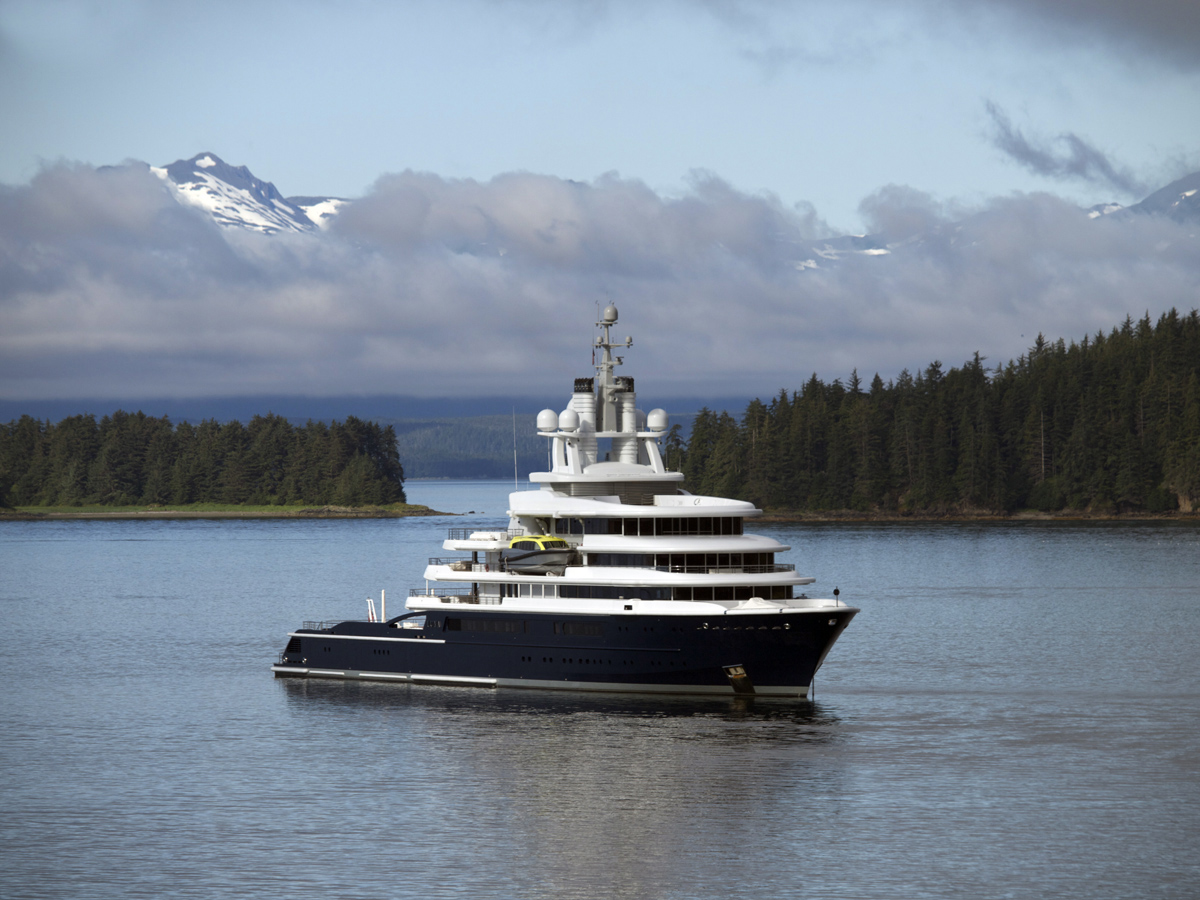
A long range expedition yacht is a steel-hulled explorer built to cross oceans and reach remote waters that conventional yachts avoid, while keeping a high standard of comfort on board. The decision comes down to range, seakeeping, service access and the way the boat carries its toys, not to the size of the lounge. This guide shows how to read those priorities and what the market looks like.
What makes an expedition yacht different from a standard motor yacht?
An expedition yacht, often called an explorer yacht, starts from a different question: how far can it go, and how well will it look after the people on board when help is a long way off?
The visible clues are a sturdy build, a high-mounted bow and a heavier, more purposeful look. The less visible ones matter more. Hull material, fuel capacity, the way systems are duplicated, and how easily the machinery can be repaired all shape whether a boat can really work far from a shipyard.
One example from the sources is Berserk, a 47-meter yacht being built by Rossinavi with a strong steel hull and transatlantic range. That detail is a good template for your own checklist: a common, widely supported engine often counts for more than an exotic one.
Expedition yachts also have a dual nature. Capability gets the headlines, but owners still expect a comfortable, well-finished interior. The same Berserk project pairs its rugged hull with five staterooms and large, open entertaining areas, with interiors by the Dutch firm The Touch Studio.
What does “long range” actually mean?
Range is the headline number on almost every explorer yacht, and it deserves some skepticism. The sources describe range in terms of what the boat can attempt: transatlantic for Berserk, and an expected transpacific range for the much larger REV Ocean. In plain terms, these labels tell you which oceans the designer had in mind.
When you compare boats, treat any range figure as a starting point for questions rather than a promise. Useful things to ask a broker or builder include:
- At what speed was the range calculated, and with how much reserve fuel?
- How many people, how much water and how many provisions does the figure assume?
- What happens to range when the boat is loaded with tenders, toys and guests?
- How easy is it to refuel along the intended route?
A boat that can cross an ocean on paper is not automatically ready for months of remote cruising. One yard-side perspective argues that a serious explorer program asks for more than good looks. It needs genuine range, dependable behavior in rough water, tender handling that still works when the weather turns, backup for critical systems, and a crew that is organized around the mission. Range is only the first item on that list.
Where do these yachts actually go?
The appeal of a long range expedition yacht is the destination list. Instead of the familiar Caribbean and Mediterranean circuits, owners aim at places that conventional yachts rarely reach. The sources mention the South Pacific, the Northwest Passage and, in some cases, Antarctica.
That ambition is part of a wider shift in who is buying. One industry voice quoted in the sources describes a feeling among some younger owners that the Med and the Caribbean were their parents’ territory, and a been-there-done-that attitude in certain parts of the market. Those owners want adventure and want boats that can deliver it.
For you as a charterer or a prospective owner, the practical consequence is that remote itineraries are planned very differently from a week in a well-served cruising ground. Think about:
- Distance from help. Weather windows, medical access and spare parts all become part of the plan.
- Season. High-latitude routes depend on narrow seasonal conditions, so flexibility matters more than a fixed calendar.
- Permissions and logistics. Remote regions often involve their own rules, fuel arrangements and support requirements, which a professional crew and an experienced agent should handle.
The best expedition itinerary is usually the one that matches the boat’s real capability, not the one with the most dramatic map.
Which builders and designs should you know?
A handful of yards have made explorer yachts a specialty, and knowing their names helps you read the market. According to the sources, the best-known is Damen Yachts in Holland, whose Xplorer series is offered in 60-, 80- and 105-meter sizes. These boats combine Dutch build quality with a nearly military aesthetic and interior comforts comparable to any motor yacht.
In Southern Europe, the explorer segment is largely led by Cantiere delle Marche (CDM) in Ancona. The same source credits that yard with sturdy, seaworthy builds, while keeping the style and design Italian boats are known for. Rossinavi, mentioned above as the builder of Berserk, is another Italian name associated with high construction quality.
At the extreme end sits REV Ocean, a 194.9-meter expedition vessel under construction at the Vard shipyard in Norway, described as set to become the world’s largest yacht. Its gross tonnage is given as 19,235, and it is also designed as a research vessel, so it will travel the globe partly for scientific purposes as well as for its owner. It is an outlier, but it shows how far the explorer concept has been pushed.
When you compare yards, look beyond the brochure photos. Ask where the boat is built, who supports it after delivery, and whether the engineering matches the voyages you actually have in mind.
How big does an expedition yacht need to be?
Size is the question most people ask first and the one that is easiest to answer badly. Larger hulls generally carry more fuel, more supplies and more crew, and they ride heavier seas more comfortably. They also cost more to run, need bigger crews and limit the harbors you can enter.
The sources give a useful sense of scale. A 47-meter explorer like Berserk is positioned as a genuine ocean-crossing boat. Damen’s Xplorer line starts at 60 meters and rises to 105. For context, a superyacht is generally defined as any yacht longer than 40 meters, so almost every serious expedition design sits in that category. Yachts of 24 meters and over are treated as large and typically require a hired crew and higher construction standards.
Instead of asking how big, ask what the boat has to do:
- How many guests will you carry, and for how long between ports?
- What activities need space, such as diving, fishing or water sports?
- How much tender and toy capacity do you want?
On Berserk, for example, a large aft deck holds a 21-foot ski boat and a 37-foot Axopar that can take guests out on scuba and fishing trips. That kind of layout tells you the boat was designed around activities, not just around accommodation.
How should you plan a voyage on one?
Whether you are chartering or exploring ownership, the planning logic is the same: start from the mission and work back to the boat. A clear brief, a sound specification and a build or charter path that preserves value is how experienced advisers describe the process.
A practical sequence looks like this:
- Define the voyage. Regions, seasons, length of time away from services.
- Test the boat against it. Range, fuel logistics, tender handling in weather, redundancy of critical systems.
- Check the crew. Experience in the intended waters matters as much as the hardware.
- Plan for support. Parts, service access and communications for the remote stretches.
- Leave margin. Weather and conditions in remote waters rarely follow a schedule.
Keep in mind that a yacht can be private, used solely for the owner and guests, or commercial, carrying no more than 12 passengers, and the category affects how it can be used and operated. If you are chartering, confirm which applies and what it means for your itinerary.
Finally, resist the urge to pick the boat with the most striking numbers. The right expedition yacht is the one whose range, crew and layout match the places you actually intend to go.
Frequently asked questions
What is a long range expedition yacht?
It is a robust, usually steel-hulled explorer yacht designed to cross oceans and reach remote waters, while still offering a comfortable interior. Examples in the sources include a 47-meter yacht with transatlantic range and a far larger vessel expected to have transpacific range.
Which builders are known for explorer yachts?
Damen Yachts of Holland is among the best known, with an Xplorer series offered in 60-, 80- and 105-meter sizes. In Southern Europe, Cantiere delle Marche in Ancona leads the segment, and Rossinavi is another Italian builder working in this field.
Where can an expedition yacht take you?
Owners look to destinations such as the South Pacific, the Northwest Passage and in some cases Antarctica. Reaching them depends on range, seakeeping, crew experience and careful logistics, not on the yacht alone.
Is bigger always better for long range cruising?
Not necessarily. Larger yachts carry more fuel and ride heavy seas more comfortably, but they cost more to run and restrict where you can anchor or dock. Match the size to your guest numbers, activities and itinerary.
Related reading
- The Tales a Personalized Charter Leaves You With
- Seasickness Without the Myths: The First 48 Hours and What Actually Helps
Sources
- Expedition Yachts: Exploring the World at the Height of … (theitalianyachtgroup.com, accessed 2026-11-04)
- Yacht — Wikipédia (en.wikipedia.org, accessed 2026-11-04)
Photo: MY Luna 72, by Gillfoto, CC BY-SA 3.0 (Wikimedia Commons)