
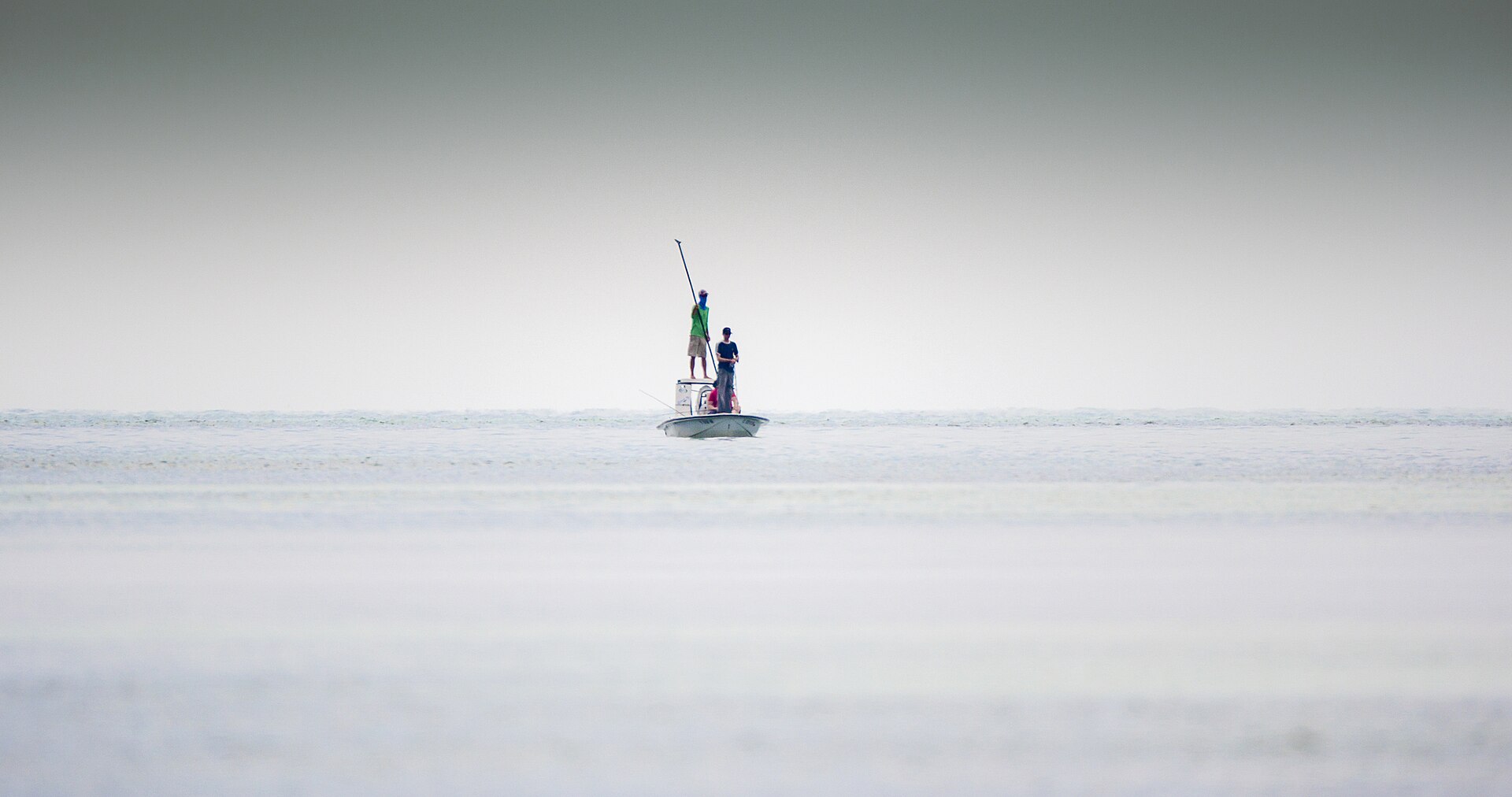
No single town wins for Florida Keys fishing. Key Largo, Islamorada, Marathon and Key West all produce good days, so the smart move is to pick your target species and fishing style first, then choose the base that fits. This guide walks through how to make that decision, what a charter usually covers, and the cheaper ways to fish without a private boat.
Where Do the Keys Sit, and Why Does It Matter for Fishing?
The Florida Keys are a coral cay archipelago that curves south-southwest from the southeastern tip of the Florida peninsula, then runs west to Key West and on to the uninhabited Dry Tortugas. The chain starts roughly 15 miles (24 km) south of Miami, which is why the northern end is easy to reach from mainland South Florida.
The geography shapes the fishing. The islands lie along the Florida Straits, which separate the Atlantic Ocean on the east from the Gulf of Mexico to the northwest, and they form one edge of Florida Bay. In practical terms, that means you can find open-water fishing on one side of the chain and sheltered, shallow water on the other, sometimes within a short drive of each other.
The Keys also hold the largest coral reef chain in the United States, which explains why reef fishing is a staple of the area. When you compare bases, think of the chain as a series of options that run from the upper islands near Miami to the far end at Key West, each with a slightly different character.
Which Part of the Keys Should You Base Yourself In?
Start with the part of the Keys where you plan to stay, because that decides how far you travel to the dock. The four main bases each lean toward a slightly different mix of trips.
- Key Largo: offshore, reef, wreck and backcountry fishing, with easy access from mainland South Florida.
- Islamorada: offshore, tarpon, flats, reef and backcountry fishing, and one of the best-known fishing destinations in the chain.
- Marathon: a Middle Keys base for reef, offshore, wreck, bridge, tarpon and family trips.
- Key West: offshore, reef, flats and backcountry fishing, plus a lot of things to do once you are back on land.
If your party includes non-anglers, that last point matters. A base with strong shore-side options keeps the rest of the group busy while you fish. If fishing is the whole point of the trip, choose the base by species and let the lodging follow.
Driving is the other factor. The Overseas Highway, which is U.S. Highway 1, links the islands, and the Seven Mile Bridge connects Marathon in the Middle Keys to the Lower Keys. Moving between bases is simple, but a long drive before dawn eats into a half-day trip, so book near where you sleep.
What Kind of Fishing Do You Want to Do?
Decide on the experience before you decide on the boat. The Keys offer three broad styles, and each suits a different kind of trip.
Offshore
Open-water trips target game fish such as mahi-mahi, sailfish, tuna and wahoo. This is the style for anglers who want big, fast fish and are comfortable spending time farther from shore. Because you are running into deeper water, sea conditions matter more here than on any other trip type.
Reef and wreck
Reef trips go after species such as snapper, grouper and barracuda. These outings can be shorter, which is why they often work well for beginners and families. If you have children or a first-timer in the group, this is usually the lowest-risk way to get a fish on the line.
Backcountry and flats
Shallow-water and protected-area fishing targets tarpon, snook and permit. It is a very different approach from boat fishing over the reef: quieter, more about spotting and presentation, and generally more suited to anglers who enjoy a technical challenge.
If your group disagrees about what to do, split the days. One offshore morning and one reef or flats outing give you variety without forcing a compromise on a single trip.
How Do You Choose a Charter, and What Should You Confirm?
Charters in the Keys come in several formats, including half-day, full-day, offshore, reef and backcountry trips. Costs depend on trip length, boat size, fishing style, fuel use and the individual operator, so there is no single price to plan around. Get quotes from a few operators and compare like with like.
One of the main choices is shared versus private. A shared trip lets you buy an individual spot instead of reserving an entire boat, which usually costs less. A private boat reserved for your group costs more but gives you control over the schedule and the style of fishing, and it suits families and mixed-ability groups.
Beginners are well served by a charter. The captain provides the boat, tackle, local knowledge and hands-on help, so you do not need your own experience or gear. Most established charters supply rods and reels, but confirm what is included before the trip rather than assuming.
Before you book, ask the operator about:
- What tackle, bait and ice are included, and whether anything costs extra.
- Whether the trip is shared or private, and how many people are aboard.
- What happens to the catch, including cleaning and what you may legally keep.
- The cancellation policy if weather forces a change of plans.
- What to bring, so you can avoid carrying unnecessary gear.
It also helps to understand what you are paying for. A captain gives you a boat, safety, and knowledge of where fish are holding, which is hard to replicate on your own in unfamiliar water.
Do You Need a Fishing License, and What About the Catch?
Licensing is one of the first questions people ask. Passengers aboard a properly licensed Florida saltwater charter vessel are generally covered by the charter’s license while fishing from that vessel. That is a major convenience for visitors, but it applies to the vessel and the trip, not to fishing you do on your own elsewhere.
If you plan to fish from a bridge, a pier or the shoreline on a different day, check whether you need your own license. Do not assume the charter coverage follows you off the boat. Rules can change, so confirm with the operator or the relevant state agency before you go.
The same caution applies to the catch. Legal harvest, fish cleaning and current regulations can all affect your trip, including what you may keep and what you must release. Ask your captain to explain the rules for the species you are targeting, and follow their guidance on handling and release. Regulations are updated over time, so treat any general guidance, including this article, as a starting point and not the final word.
Can You Fish the Keys Without Booking a Private Boat?
You do not need an expensive private charter to fish the Keys. Several lower-cost routes work well, and many visitors combine one charter with some self-guided fishing.
- Bridge fishing: fish from legal bridge access points around the Keys. Because the islands are linked by bridges, some of them allow fishing, but not every span does.
- Shore and pier fishing: look for public shoreline access, piers, parks and other legal fishing spots.
- Shared boat trips: buy a single spot on a group trip rather than reserving a whole boat.
- Backcountry on your own terms: shallow water and protected areas call for a different approach, and some anglers prefer to hire a guide for this style only.
Check access before you head out. Some stretches of older bridge have been closed to fishing or vehicles over the years, so rely on current local information, not on old advice. Park only where it is permitted, respect posted rules, and keep your gear compact so you are not blocking a walkway.
A sensible plan for a mixed budget is to book one reef or shared trip for the hands-on experience, then fish bridges and shoreline on the other days.
When Should You Go?
Fishing is available throughout the year in the Keys, but different months suit different species. That means the right month depends on what you want to catch, and not the other way around.
Work backward from your target. If you have your heart set on a particular game fish, check which months favor it and plan your dates around that window. If your dates are fixed, flip the process: look at what is likely to be biting during your stay and choose the trip type that matches.
Beyond species, keep two practical points in mind. First, the Keys sit in hurricane territory, and the strongest hurricane to strike the United States made landfall near Islamorada on Labor Day in 1935, so storm season deserves a place in your planning. Buy flexible bookings or travel protection if you travel in months when tropical weather is possible. Second, weather on the day matters more than the calendar, so build a spare day into the trip if you can. A rebooked charter is far easier to manage when you are not racing a flight home.
Frequently asked questions
Where should you base yourself for Florida Keys fishing?
Key Largo, Islamorada, Marathon and Key West all fish well, so no single town is the answer. Let your target species and preferred style decide, then pick the base that matches.
Are fishing charters in the Keys good for beginners?
Yes. The captain provides the boat, tackle, local knowledge and help, so a first-timer can fish without experience or gear. Reef trips are often a gentle starting point.
Do charters provide rods and reels?
Most established charters supply fishing equipment, but you should confirm exactly what is included before the trip. Ask about bait, ice and any extras at the same time.
Do you need a fishing license on a charter?
Passengers aboard a properly licensed Florida saltwater charter vessel are generally covered by the charter’s license while fishing from that vessel. If you fish from a bridge, pier or shore on another day, check whether you need your own license.
Related reading
- How to Choose the Right Sailing Charter for You
- Trout Fly Fishing Flies: A Compact Selection for Boat Anglers
Sources
- Florida Keys Fishing Guide: Plan Your Fishing Trip | Florida … (keysfishingtrip.com, accessed 2026-11-23)
- Florida Keys — Wikipédia (en.wikipedia.org, accessed 2026-11-23)
Photo: Pole Fishing in Florida Keys (39506104961), by National Marine Sanctuaries, Public domain (Wikimedia Commons)